


Only God creates life as the story of Genesis reveals, and He rejoices in His handiwork: “And it was good.” Only God identifies Himself with His name as Life itself, Being: “I am Who am.” The God of Life and Being revels in the copious variety of creation teeming with nature’s plant, animal, and human life in the birds of the sky, the fish of the sea, and the animals on earth. Loving creation, God ensures the reproduction of the species with the natural laws of sowing and reaping and being fruitful and multiplying. To cooperate with God’s design and purpose and to live in tune with Nature’s laws, all living things receive life to give life and to continue the species. Life is fecund and fruitful, intended to proliferate and fill the earth. To be anti-God is to be anti-life, and to anti-life is to be anti-God. God’s enemies wage war against Him by attacking His very nature as existence itself, the fullness of His Being, His life-giving, generative powers that He bestows upon creatures that He enjoins to procreate and perpetuate His work of fruitful abundance and variety.
Because the enemies of all-powerful God who is the author of life cannot conquer Him in battle, as seen in the defeat of Satan and the fallen angels, they fight in other artful ways as the tragedy of the Fall and the temptation of Adam and Eve illustrate. In John Milton’s Paradise Lost, Satan’s seduction of Eve into eating the forbidden fruit not only causes banishment from Paradise and the wound of original sin but also insinuates into the minds of Adam and Eve the sinister ideas of suicide and the prevention of the human race. In a state of shock at the loss of Eden and the punishment of death, Eve is repelled at the thought at conferring original sin and its consequences to their children. Afflicted with guilt and shame, she proposes to Adam, “Childless thou art, Childless remaine: So Death/ Shall be deceiv’d his glut, and with us two/ Be forc’d to satisfy his Rav’nous Maw.” Then she suggests suicide: “Let us seek Death, or hee not found, supply/ With our own hands his Office on ourselves.” Satan, then, God’s arch-enemy, not only brings death into the world with the Fall but also instills an anti-life mentality to Adam and Eve by tempting them to remain childless or to seek death.
 As Milton’s poem illustrates, the Satanic strategy of destroying life by the introduction of death and discouraging procreation by despair assumes many forms from the loss of Paradise to the evil of death to the temptation of childlessness to the thought of suicide. Whether death comes in the carnage of wars in human history or child sacrifices in the worship of Baal and Moloch, Satan wages his battle against God to subvert His design for creation and His providential plan for human life. Although the diabolical agenda remains the same, the methods assume more subtle forms and employ more deceptive appearances as evil wears the mask of good and the Devil’s designs sound benevolent and humanitarian. These strategies assume the form of enlightened, progressive ideas full of empty promises. They presumably liberate man from the narrow-mindedness and prejudices of the past, they multiply his range of choices and sources of happiness, they alleviate suffering and guilt, and they herald a brave new world without God’s commandments, religious ideals, or moral inhibitions.
Population control is one tactic that combats God’s purposes in human history, the myth that the earth cannot sustain the billions who will starve and lack resources if families do not limit themselves to two children or choose childlessness for the sake of the planet. Yet the evil of population control is couched as concern for the quality of life and care of the environment. Contraception also serves the cause of Satan to prevent life and to frustrate love’s fruitfulness, violating the most natural end of marriage and severing the relationship between love and life. Yet the evil of contraception resorts to euphemisms like “reproductive rights” or “a blessing” to improve marital happiness. Legalized abortion continues the assault on God’s providential order by the slaughtering of millions of lives to deny existence to future generations who are unwanted or handicapped children who will burden society or suffer lives of misery. Yet the evil of abortion is rationalized as an assertion of freedom and choice, a private decision subject to no higher moral authority than individual autonomy and the right to one’s body. Evil always masquerades itself as some form of greater good, similar to Satan’s lies to Eve: “You will not die” and “you will be like God.”
Another weapon used in Satan’s war against God attacks the family in the form of divorce that torments children and ruins their idea of the goodness of marriage and the indissolubility of promises. The introduction of strife in marriage serves the purpose of frustrating God’s plan for the family and alienating men and women, discord that causes unstable or impoverished families and fewer children. Yet the evil of divorce carries no stigma or culpability when laws designate it as “no-fault divorce”, a commonplace occurrence, a new opportunity for happiness. The assault on traditional marriage also degenerates into the sterile relationships of same–sex unions that pervert God’s intention in creating human beings as male and female in the exchange of fruitful love. Euthanasia, physician-assisted suicide, or “death with dignity” presents another scheme to end life, one that imagines death as a panacea for pain, worry, and a useless life and as an economic solution to financial burden. Yet physician-assisted suicide violates the natural law that commands “Thou shalt not kill,” repudiates the Hippocratic Oath that commands “First of all, do no harm,” and makes man a god who arbitrates life and death. The deadliness of evil always wears a benign appearance.
The Devil’s resourcefulness never stops. It undermines the goodness of marriage and life through economic policies that encourage two incomes and compel women of young children to work outside the home. Ideology replaces truth when a society popularizes the idea that happiness comes from a career, not from a home and family, and that daycare institutions provide for children as well as their home. Financial exigency, the cost of living, credit-card debt, usurious loans, and the expenses for higher education naturally encourage small families. The weight of indebtedness incurred by college graduates delays or frustrates the desire to marry, purchase a home, and begin a family. As fewer marriages occur for a variety of reasons, some of them economic, and as the trend moves toward later marriages, again God’s plan of fruitfulness and multiplication suffers.
The diabolical strategy of Satan and his minions is to limit, poison, sterilize, euthanize, abort, and frustrate all that is life-giving, procreative, and fertile. Childlessness or a one-child policy is preferable to fruitfulness and multiplication. The ideal population of the world is one billion, not six. Tubal ligations and vasectomies give evidence of responsibility and social conscience. Marriage is optional or unnecessary, just an “artificial construct” or alternative to cohabitation. Children are not the hope of the world, but the problems of society and an inhibition of freedom and pleasure. The more sterilization, the more infertility, the more divorce, the more abortion rights, the more same-sex marriages, the more Planned Parenthood indoctrination of the young, and the more unmarried adult men and women—the greater the sexual revolution, the braver the new world, and the sooner heaven on earth. This is the secular world’s idea of progress.
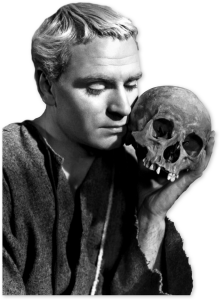
“To be or not to be,” Hamlet’s great philosophical question, has been answered “Nay” by the lawmakers, judges, academicians, and journalists that have created the institutionalized “structures of sin” (St. John Paul II’s phrase) that shape the policies and practices of contemporary society. As G. K. Chesterton wisely observed, once upon a time the word “courage” meant the fortitude to die, but nowadays it takes courage to live. Satan’s strategy cunningly exploits the absence, disappearance, or dearth of children to blind an adult population from remembering their childhood, from seeing the innocence and joy of children, and from falling in love with life again and again as they witness the child’s will to live and love of life—the child who plays inside and outdoors, with friends or alone with his imagination, in the haystack during the summer or with the snow in winter and enjoys the “Happy Thought” in Robert L. Stevenson’s A Child’s Garden of Verses: “The world is so full of a number of things,/ I think we should all be happy as kings.”
 Mitchell Kalpakgian, Ph.D. has completed fifty years of teaching beginning as a teaching assistant at the University of Kansas, continuing as a professor of English at Simpson College in Iowa for thirty-one years, and recently teaching part-time at various schools and college in New Hampshire. As well as contributing to a number of publications, he has published seven books: The Marvelous in Fielding’s Novels, The Mysteries of Life in Children’s Literature, The Lost Arts of Modern Civilization, An Armenian Family Reunion (a collection of short stories), Modern Manners: The Poetry of Conduct and The Virtue of Civility, and The Virtues We Need Again. He has designed homeschooling literature courses for Seton Home School, and he also teaches online courses for Queen of Heaven Academy and part-time for Northeast Catholic College.


