


Many people wonder how we Catholics can still believe given some of the more infamous events in Church History; the classic duo of the Crusades and the Inquisition spring to mind. First, yes, the human members of the Church have made mistakes and lots of them. (See last article on hypocrites in the Church). One only needs to think of the Renaissance Popes who, despite all their misdeeds, never attempted to change Catholic teaching to justify it. Regardless, the Church’s members, today and yesterday, have hurt and turned away many well-meaning people, and that is tragic. The Church is meant to be a haven for all humankind, the mustard seed that grows into a tree large enough for all the birds of the air to nest in.
 When approaching historical matters in the Church, particularly controversial ones, two extremes must be avoided: the first is a Catholic triumphalism that seeks to gloss over any real error a member of the Church may have made. We have no reason to do this because we understand that Church members can and do sin while on the path to eternal glory. Second, we have to avoid the opposite extreme of demonizing everything the Church has ever done and leaping on the bandwagon of criticism before giving an honest investigation. For most of these events, hundreds of years have passed, and the history that we learned from a few paragraphs of a high school textbook is woefully over-simplified (not without a few decent reasons) and can tend to distort our view of what actually happened.
To understand history honestly is to try to see through the eyes of the people who experienced it back before it was called “history”, when it was simply their day-to-day lives. The Catholic historian Hilaire Belloc wrote “the most difficult thing in the world in connection with history, and the rarest of achievements, is the seeing of events as contemporaries saw them, instead of seeing them through the distorted medium of our later knowing.”
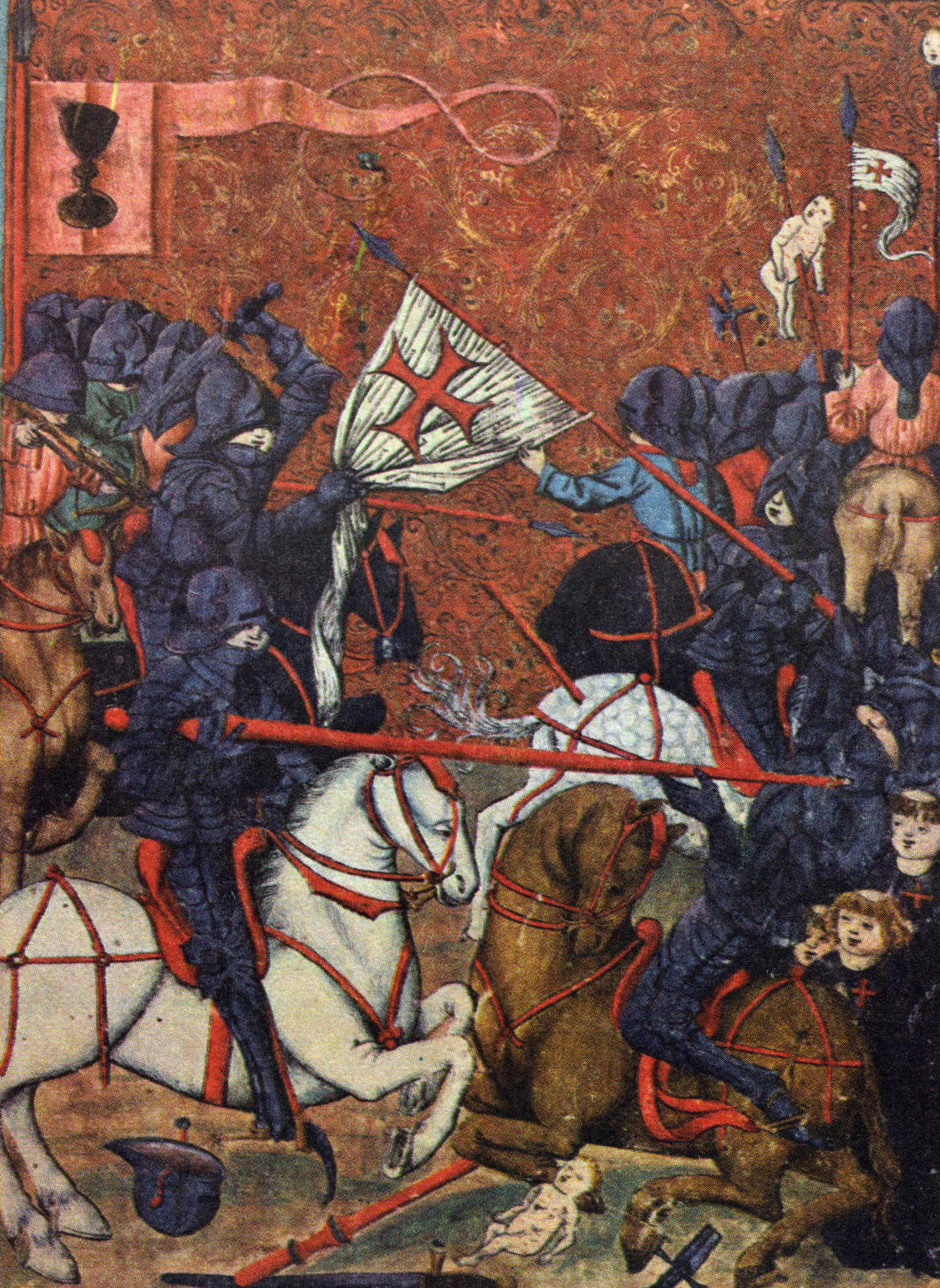
I’ll start with the Crusades, perhaps the biggest bogeyman in the anti-Catholic rhetorical camp. The commonly received narrative of the Crusades is that they were despicable unprovoked wars of religious aggression, publicly endorsed for the sake of “converting” the Muslims, but actually meant to seize all their territory through colonization.
It is not the place of this essay to take on all of these one by one and separate fact from fiction, but I will throw out a few relevant points:
“The crusaders did not insist on converting those living under their control; rather they fought to defend the Christians already living in the Holy Land and those making pilgrimages there. And as for the colonization or imperialism myth, it is debunked by the reality that the crusaders held only a few cities at any one time and left hardly enough troops to maintain the garrisons let alone expand an empire. The vast majority of the survivors returned home, battered and poorer for their efforts.” (More on the Crusades here)
Additionally, the Holy Land had been Christian territory for hundreds of years after the fall of Rome when it was conquered by the expanding Islamic nation. Leading up the Crusades, there had been many instances of aggression against Christians, including the murders of priests and harming of European pilgrims to the Holy Land. When Pope Urban II gave the call to arms in 1095, I truly believe he thought he was calling a just, defensive war. In fact, in The Glory of the Crusades, professor Steve Weidenkopf “explains how the Crusades marked an innovation in the Church’s approach to lay spirituality. Pope ‘Urban’s summons to Jerusalem was a “universal call to holiness” oriented specifically at the laity, who otherwise believed the only sure way to contribute to their salvation was to renounce the world and enter the monastery,’” a way of life with contrasted sharply with the violent life of a medieval knight.
That is not to take a triumphalist approach and say that all the Crusades, or even the first one, were perfectly just wars. Once the fighting actually began, the European forces floundered badly and did commit slaughters of innocents that qualify as war crimes as we understand that term today. Later, in the fourth Crusade, when the crusaders were between a rock and a hard place and in need of cash, they sacked Byzantium, the capital of the Eastern Christian Empire, a wound still open between Eastern and Western Christians. The crusaders certainly made their fair share of missteps, even if their aim was not outright colonization and even if they did have some legitimate reasons to go to war.
The point is that the actual Crusade history is not as cut and dry as it is often presented. Where there are faults, we should be honest about them, admit them and repent. But not every aspect is a fault, and we should be proud of the things that were done well or any righteous intentions such as the work of St. Bernard in preaching the Second Crusade or St. Francis visiting the Holy Land himself in 1219.
This approach of neither demonizing nor unnecessarily valorizing the Church, but rather trying to figure out how the people who experienced the events saw them, is a helpful tool to take up when looking at other famous “outrages” as well such as Inquisition.
The Inquisition today dredges up images of tortures and forced confessions for heresy, witchcraft and all manner of things. Without going into too much detail, the formal procedure of the “Inquisition” was adopted in the 13th century during the explosion of the Cathar heresy, a dualistic body of teachings that opposed the Catholic sacraments and promoted suicide for its highest rank of members. The Inquisition of the 13th century sought to root out heresy, or people who believed in Catharism because they viewed these ideas of dangerous to society, not unlike how the U.S. reacted to Communism in the 1950s. We so often forget that Christianity gave identity to medieval Europe the way “Freedom” or the name “America” gives identity to people living in North America today.
The Inquisition was actually instituted as a formal procedure to investigate these issues by qualified persons as an alternative to some of the disorderly, mob-like tribunals that had sprung up. Did the Inquisition overdo it at times? Likely. We can admit that. We can also recognize the balance it initially sought to bring. We should also separate things that are relevantly separate such as the Spanish Inquisition of the 15th century which had deep political motivation as well and the Witch-burning craze, which was its own phenomenon (by the way, the Catholic Church condemned the witching-finding guide, the Malleus Maleficarum, just three years after its publication.
But we don’t have to abandon the Faith because of some historical errors or determine the Church to be a uniquely wicked body; in these ways, the Church is almost analogous to any cultural group. The Divine element of the Church is in her teachings, the Holy Spirit, and in her members at the end of time. We can see human errors as guides of what to avoid when we look at others in our own world who don’t conform. We want to be honest both in reading history and approaching the Other be they Christian, Muslim, Atheist, Homosexual, Orthodox, Liberal, Conservative, American, etc. etc. We are all human underneath, and as Catholics we believe that all of us are made in the Image of God.
We should strive to find that Image especially in our enemies, even historic enemies as modern man might see a crusader, as Christ himself called us to love and pray for enemies and those who hate us.
We can try to understand the human motivations that drove people overboard; and my discovery was that “they” of the Crusades or the Inquisition are not unlike me; I have failings and so do they. Does that mean no one went too far or made a mistake? Of course they did. That is we are called to repent of our sins, because sin is real and it really is scandalous and harmful, and we truly ought to avoid it at all costs.
 Stephanie Pacheco is a writer, blogger, and speaker in Northern Virginia. She earned a M.A. in Theological Studies, summa cum laude, from Christendom College and holds a B.A. from the University of Virginia in Religious Studies with a minor in Government and Political Theory. She has presented at a conference of the American Catholic Historical Association and for Christian Women in Action. She lives with her husband and two young children.


)