


The season of Christmas comes in the darkest of seasons when the day is filled with more hours of night than day. In the midst of this gloom when nighttime has conquered daylight, “the Word became Flesh and dwelt among us, full of grace and truth” (John 1:14). The Bible uses the Greek term logos for “the Word” becoming Flesh. Logos not only refers to God but also identifies God as reason, truth, and light. God’s nature is to bring light into a dark world, to provide lamps and beacons to prevent man from losing direction on the sea of life, wandering in the ocean, perishing on the rocks, or losing a sense of purpose or destination. God does not order man to live in the blackness of night or to think with a darkened intellect.
God speaks to man’s reason as well as his heart and conscience by depositing His truth or logos in the Church and providing a Magisterium—the teaching authority of the Pope—always to proclaim the eternal truths that Christ said would never “pass away.” Christ called this great light “the Way, the Truth, and the Life”—God’s all-wise plan for human and eternal happiness that depends on revealed knowledge as clear as sunlight and on the light of man’s intelligence to see self evident truths that shine like stars and suns. Just as sight is impossible without a source of light and the power of eyesight, the discovery of truth never occurs without God’s logos creating an intelligible world and man’s mind exercising its desire to know.
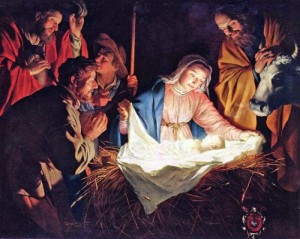 Imagine a world in which darkness always prevailed with only short periods of light, or picture a seacoast with no beacons of light guiding the ships. Imagine a world without Christian tradition, Holy Scripture, or the Magisterium—a world without the voice of God speaking through the prophets, the saints, and the popes. Without the teaching authority of the Pope condemning unjust wars, proclaiming the magnificence of marriage, and defending the sacredness of all human life from birth to death, political parties, biased judges, and the media would act as gods who dictate the meaning of right and wrong, redefine marriage, and decide who lives and who dies. Without God’s light, man’s madness leads to self-destruction and tragedy. The godless darkness of Nazism, Communism, atheism, and the modern “culture of death” have destroyed more lives in one century than all the wars of all the previous centuries. Darkness robs the world of its goodness, beauty, and glory. Life then becomes “a tale told by an idiot, signifying sound and fury, /Signifying nothing” as Shakespeare writes in Macbeth.
However, God does not will man’s life to be without design or purpose, a futile existence signifying nothing more than being born and dying, but an abundant life filled with meaning. Christmas illuminates this meaning, God’s great plan. God in His love sent His light, His Son, the Word—logos– into the darkness so that man would not lose his mind, heart, soul but always find his way in the maze of conflicting opinions, heretical ideas, and political ideologies that spread darkness. “The light shines in the darkness, and the darkness has not overcome it” (John 1:5). This great light offers more luminosity than all the fashionable political doctrines and philosophical theories that come and go multiplying darkness by reinventing truth to suit the fashions of the day. The giving, the teaching, and the transmitting of the truth are acts of love from God to man, from the shepherds of the Church to the flock, and from Tradition and Scripture to all nations. God in His Divine Providence does not leave His children poor but rich in the knowledge of His nearness, presence, and love—the miracle of the Incarnation. God created man in His own image which is logos: the God of light and reason created man as an intelligent being to see the splendor of the truth, behold its beautiful clarity, and wonder at the glory of a world whose light is as inexhaustible as God’s love. God does not leave man in a state of ignorance.
Dante’s Paradiso uses this image of light to illumine the nature of God’s love which is as diffusive and communicative as beams that shine everywhere. The poem begins, “The glory of the One who moves all things/ penetrates the universe with light, / more radiant in one part and elsewhere less.” This light is always dynamic, streaming its rays in all directions and playing off many surfaces. It reflects on mirrors that “ricochet the radiance,” and it sparkles like the iridescent colors of swimming fish “more than a thousand splendors all aglow.” In Paradise Dante sees the constant movement of light flashing and glowing, an energy of light that moves like “a host of lamps . . . more or less swiftly moving all a-dance/according to their grace of inner sight.” When Dante as pilgrim beholds the blessed spirits in the heavenly world, he marvels at their glorified appearance: “The souls/ Within that sun I entered, ah how bright!” Dante sees light from mirrors, torches, flames, lamps, lanterns, candles, jewels, eyes, rivers, stars, and suns. Dante marvels at the “thousand thousand lights” and the “one Sun that set them all to kindle.” All of heaven is aflame with brightness, and “The primal light is taken differently/ by all the various splendors; each one receives/ the radiance in its own and single way.” God is light, and all of Paradise is unending light—the same light that penetrates the darkness of a fallen world suffering the tragedy of Original Sin.
God creates all this glory, light, beauty, and splendor to fill man’s mind with the knowledge and love of God. This great light that abounds everywhere in Paradise is the same light enters the darkness in Christmas and shines as a star to announce the coming of the source of Light itself. This heavenly light does not just give illumination to the mind but also warmth to the heart and beauty to the eye. It shows the Way (the path of love), the Life (eternal happiness), and the Truth (the words that never pass away). In Dante’s poem Beatrice’s appearance in Paradise embodies truth: she is the guide or teacher who will lead him to the Beatific Vision and who instructs him: “That is the point . . . whence Heaven and all things depend.” She embodies beauty: Dante contemplates the beauty of her smile and the purity of her eyes and soul that shine from her smile: “I turned to look into her lovely eyes . . . . I saw a point that shot out rays of light/ so keen, you have to shut your eyes before /the searing brilliance of its radiant might.” She embodies goodness: “So all the dust and chaff that filmed my eyes/ the eyes of Beatrice swept away, with more/than thousand thousand of her flashing rays, / And I saw clearer than I’d seen before . . . .”
What happens to Dante in Paradise through the light of Beatrice’s teaching as he sees “Above the thousand thousand lights . . . one Sun that set them all to kindle . . . one light-filled Being radiantly clear and brighter than my vision could appear” happens every Christmas when the Word Becomes Flesh and “The light shines in the darkness, and the darkness has not overcome it” (John1: 5).
 Mitchell Kalpakgian, Ph.D. has completed fifty years of teaching beginning as a teaching assistant at the University of Kansas, continuing as a professor of English at Simpson College in Iowa for thirty-one years, and recently teaching part-time at various schools and college in New Hampshire. As well as contributing to a number of publications, he has published seven books: The Marvelous in Fielding’s Novels, The Mysteries of Life in Children’s Literature, The Lost Arts of Modern Civilization, An Armenian Family Reunion (a collection of short stories), Modern Manners: The Poetry of Conduct and The Virtue of Civility, and The Virtues We Need Again. He has designed homeschooling literature courses for Seton Home School, and he also teaches online courses for Queen of Heaven Academy and part-time for Northeast Catholic College.


