


The price of freedom is eternal vigilance. We have all heard that adage. It is a true one, especially in regard to moral threats to society. For a long time we have been warned of the dangers of abortion in our country. We are also quite aware of the movement to legalize same-sex marriage. But now another cloud looms on the moral horizon — assisted suicide and euthanasia.
Oregon legalized assisted suicide by popular vote in 1997, and in 2009 the State of Washington followed. Efforts to do the same were first undertaken in California but they were rejected by the voters. Montana legalized assisted suicide in 2009 through the decision of a court.
When discussion was taking place concerning this issue in California and Oregon (in the mid 1990’s), many commentators said that assisted suicide – i.e., the prescribing of a lethal potion for a patient – would naturally lead to “euthanasia,” or the actual killing of a patient through injection of chemicals by a doctor.
 The argument was that some patients who received a lethal prescription would not be able to administer it to themselves because they were too weak or were unable to move. Someone else would be needed to administer the fatal drug otherwise the patient would be unable to have the legal benefit to which he or she was entitled.
Actually that prediction did not come about — at least not yet. But it may be before us soon. A recent article in Zenit News by Denise J. Hunnell, M.D., alerts us to some disturbing trends.
First of all, among doctors a new ethical model is being practiced. Physicians are putting the “greater good” of society above individual patients.
The increasing numbers of articles in medical journals calling for assisted suicide and euthanasia is evidence of this trend. In June of this year, the British Medical Journal ran articles endorsing both assisted suicide and euthanasia, declaring that physicians who do not respect the autonomy of patients to receive these procedures are guilty of paternalism. Another article proposed that the decision for such procedures is a “society” questions not a medical one. In addition a recent claim was made by a British physician that the British National Health Service kills 130,000 patients a year by denying them water and nutrition. The government ought to recognize that this is just another form of euthanasia.
Here in the states, the July issue of the New England Journal of Medicine contained an article recommending that all patients who fulfill the legal criteria for assisted suicide in Oregon and Washington should be able to obtain lethal drugs without a prescription. And the Journal of the American Medical Association (JAMA) recently endorsed a book by two physicians advocating that the medical profession should reject the principle that a physician should never cause the death of a patient and the principle that people ought to be dead before organs are harvested from them.
The appearance of multiple articles in mainstream medical journals advocating killing is disturbing. Now is the time to clearly denounce such positions before they become acceptable.
A version of this article appeared in Today’s Catholic, the newspaper of the Archdiocese of San Antonio.
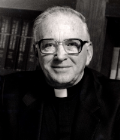 Father John A. Leies, a Marianist priest, is past president, past academic vice-president, former Theology Department Chair, former Head of Campus Ministry, a tenured Professor of Theology and President Emeritus of St. Mary’s University of San Antonio, an institute at which he has spent 37continuous years. He has been named as an Outstanding Faculty Member of the School of Arts and Social Sciences and also of the Graduate School.
He was born in Chicago, attended St. Michael’s High School there, administered by the Society of Mary. He made his novitiate studies in Galesville, Wisconsin, and then completed college studies at the University of Dayton (Ohio). He went on for seminary studies at the University of Fribourg, Switzerland, where he was ordained and where he completed a Doctorate in Theology (S.T.D.).
Father Leies has held many assignments at home and abroad for his religious community, the Society of Mary. Before coming to St. Mary’s University, he taught and served as chaplain at three high schools, one of which was in Lima, Peru. In Peru, he also served as the Regional Superior of the Marianist works (1964-68). He too was the first Head of Religious Life for the St. Louis Province of the Society of Mary (1961-64).
He has written and lectured in the area of medico-moral problems, has been an advisor to legal and ethical associations, is a Consultant for the National Catholic Bioethical Center (NCBC), and holds memberships in professional groups such as the Fellowship of Catholic Scholars and Faculty for Life He has been invited to attend the biennial Catholic Bishops’ Workshop on Bioethics for the past 20 years.
He has written well over 200 articles for Today’s Catholic, the San Antonio archdiocesan weekly newspaper, in addition to articles for other publications. He has edited two books for the NCBC: Handbook of Critical Life Issues and Handbook of Critical Sexual Issues, college texts that have been used at St. Mary’s University and a number of other schools. He also co-hosts a weekly news show on Catholic Television of San Antonio (CTSA).


